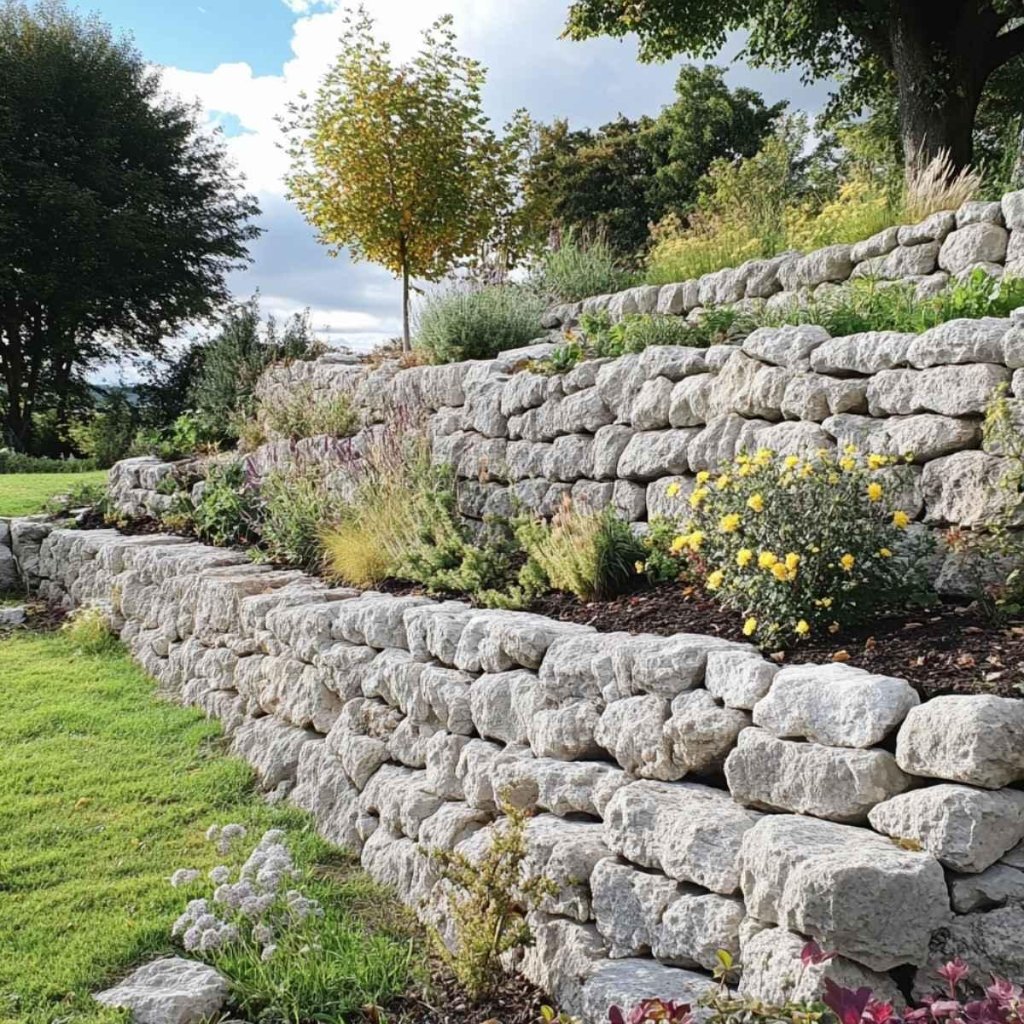
Eroding slopes are one of the most common property problems we see across Cumberland County. The Plateau's clay-heavy soils, significant rainfall, and rolling terrain create the perfect conditions for hillside erosion — and once it starts, it gets worse every rain event.
Why Slopes Erode
Slopes erode when the velocity of surface runoff exceeds the soil's ability to resist it. Clay soils in particular become slick when saturated and offer little resistance to moving water. Without vegetation or structural measures to slow and redirect water, runoff carves channels that widen over time.
Option 1: Retaining Wall + Terracing
For slopes with significant elevation change, retaining walls are the most permanent solution. A single wall holds back the slope and creates a flat, usable area. Multiple tiered walls convert a steep hillside into a series of level terraces — each flat area becomes usable yard space. Cost in Cumberland County: $30–$80 per square foot of wall face depending on material.
Option 2: Regrading + Drainage
Sometimes the slope doesn't need to be retained — it needs to be regraded to a shallower angle and planted. We use a skid steer to cut the slope back, establish a gentler grade, and address any drainage channels that are concentrating runoff on the slope. Adding a French drain or swale above the slope intercepts runoff before it reaches the problem area.
Option 3: Dry Creek Bed Swale
A dry creek bed installed at the base or across a slope controls where runoff flows without requiring excavation of the whole hillside. It's a good middle-ground solution when the slope is mild and erosion is concentrated in one channel.
Vegetation After Stabilization
Structural stabilization comes first — then vegetation. Planting grass or ground cover on an actively eroding slope without addressing the underlying water movement will fail. Once the grade and drainage are corrected, we can seed, sod, or plant ground cover to lock the soil in place long-term.
