GleeWork Services
Retaining Wall
Installation
Retaining wall installation in Crossville and Middle Tennessee — structurally sound walls with proper drainage, designed to manage elevation, control erosion, and create usable outdoor space.
What We Build Retaining Walls For
Retaining walls solve a variety of site challenges across Middle Tennessee properties. Here are the most common project types we install.
Tiered Yard Walls
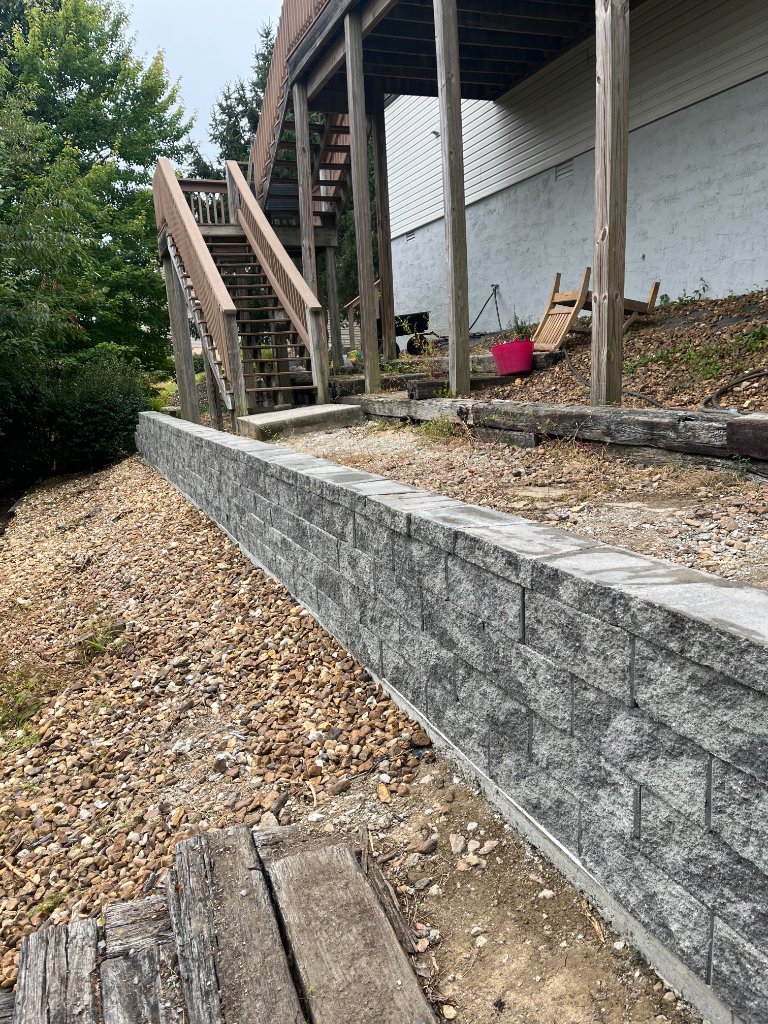
Convert a steep or unusable slope into a series of level terraces. Tiered retaining walls create flat, usable outdoor spaces and dramatically improve the function and appearance of a hillside property.
Driveway Retention
Walls along driveways hold back cut slopes and prevent soil from washing onto paved surfaces. Common on properties where the driveway cuts into a hillside or elevation changes significantly at the entrance.
Landscape Bed Walls
Low retaining walls define and elevate planting beds, adding structure and visual depth to landscaping. These walls retain mulch or rock, keep beds defined, and prevent soil runoff.
Structural Grade Change
On properties with significant elevation changes, a structural retaining wall creates usable, level ground where there was none. These larger projects require proper engineering, drainage, and block selection for long-term performance.
How GleeWork Builds Every Wall
Every GleeWork retaining wall is built with the same structural standard regardless of size. That means proper footing depth, a mechanically compacted base, and a full drainage system behind the wall — not skipped to save time or money.
Drainage is the most critical element of a long-lasting retaining wall. We include compacted drainage aggregate directly behind the wall face, geotextile filter fabric to prevent soil migration into the stone, and a perforated drain pipe at the base of the wall to route water away from the structure.
Each block course is set back slightly from the one below — called "batter" — which is what gives the wall its structural strength and clean appearance. We use a transit level throughout installation to ensure everything stays plumb, level, and properly stepped.
Every Wall Includes:
Footing excavation to correct depth
Typically 6–12" below grade, determined by wall height and soil type.
Compacted aggregate base
Mechanically tamped to prevent settling and establish drainage grade at the footing.
Drainage aggregate zone
Clean crushed stone placed immediately behind the wall — no soil in direct contact with the block.
Geotextile filter fabric
Separates drainage stone from native soil, preventing the aggregate from clogging over time.
Perforated drain pipe
Installed at the wall base to collect and route water away from the structure.
Correct block batter & setback
Each course is stepped back for structural integrity and clean finished appearance.
Wall Materials We Install
The right material depends on how much retention is needed, the aesthetic of the property, and budget. We'll advise the best option for your specific site.
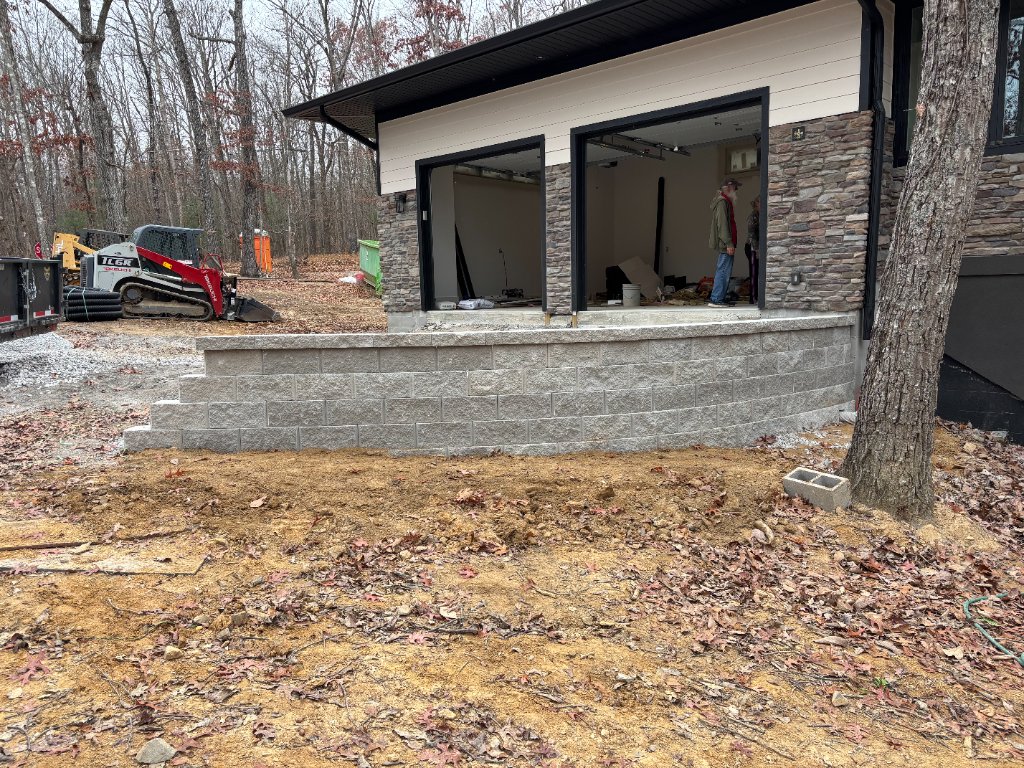
Concrete Block
The most common retaining wall material in Middle Tennessee. Segmental retaining wall (SRW) blocks stack without mortar, allow drainage, and handle significant lateral pressure when built correctly with proper base and drainage.
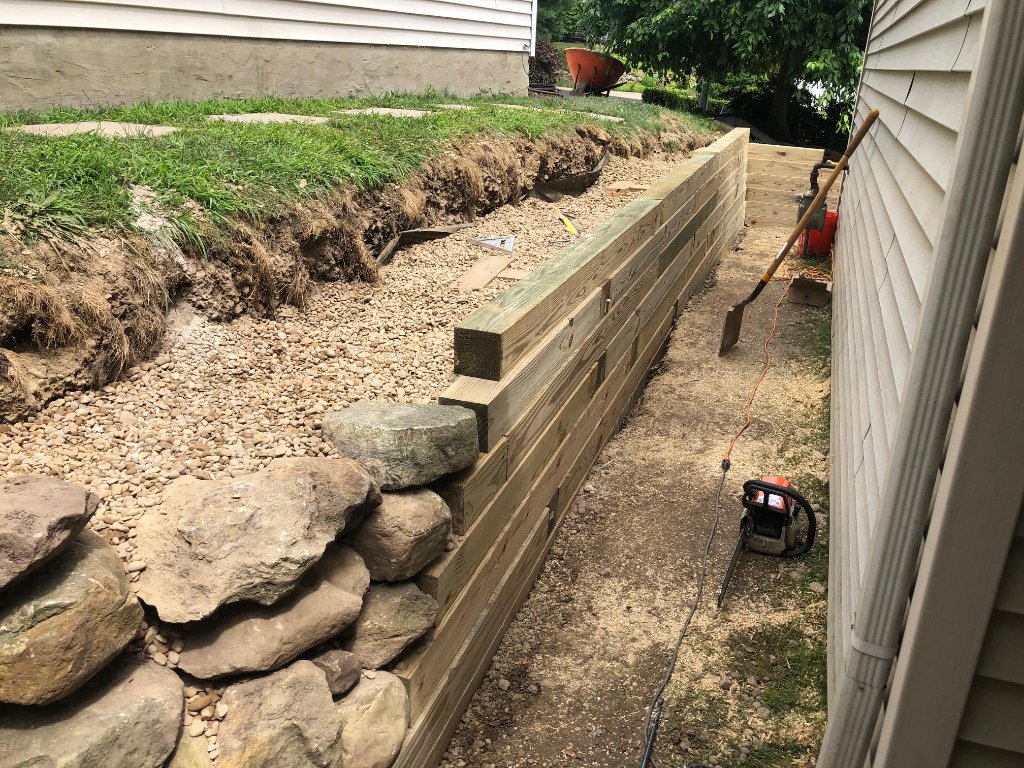
Cross-Tie
Pressure-treated timber cross-ties are a cost-effective solution for moderate slope retention and garden bed edging. Ideal for rural and country properties where a natural wood aesthetic fits the surroundings. Deadmen anchors are installed for structural stability.
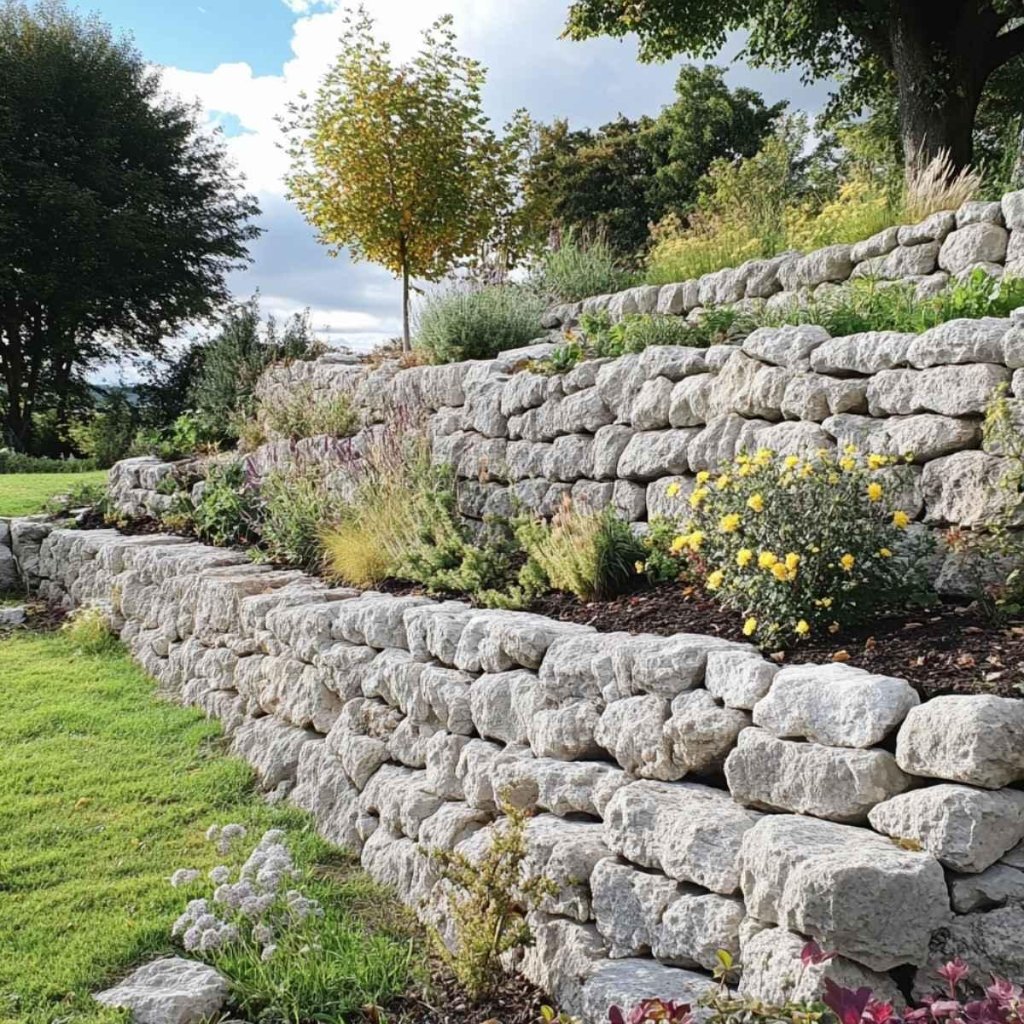
Natural Boulder
Natural boulders and fieldstone create some of the most beautiful and permanent retaining walls available. Excellent for properties with wooded or natural settings. Boulders are placed with equipment and locked together — no mortar needed. Extremely durable and blends seamlessly with the landscape.
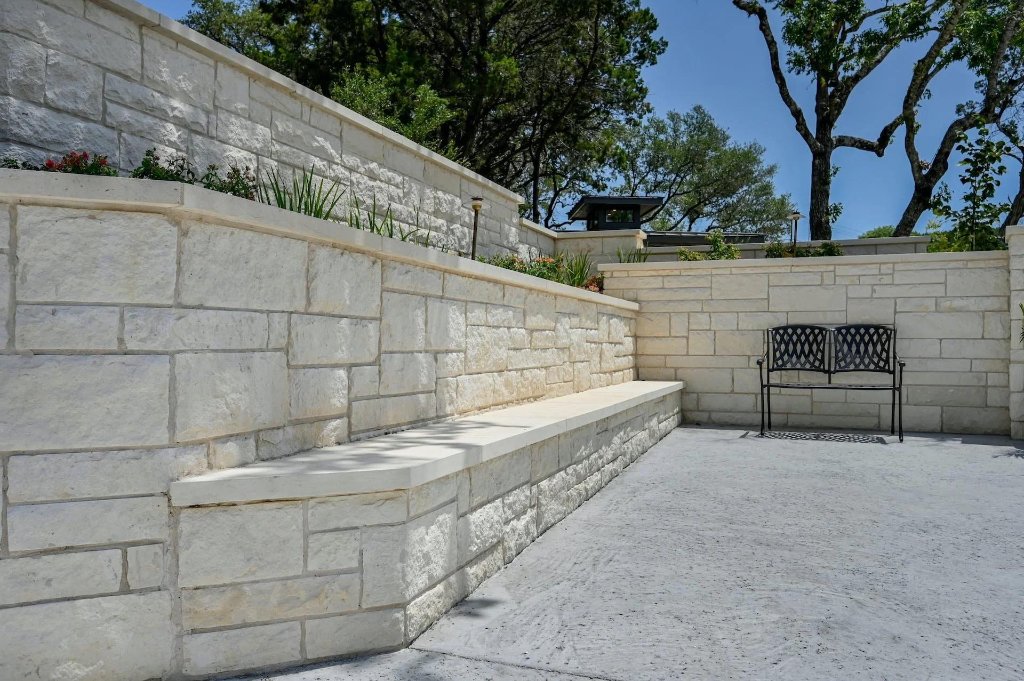
Stone Veneers
Stone veneer walls combine structural concrete block with a premium natural or manufactured stone face. The result is a high-end finished appearance at a more achievable price point than full natural stone. Popular for visible front-yard walls, entranceways, and outdoor living areas.
Retaining Wall Cost in Cumberland County
Regional pricing for installed retaining walls in Crossville and Cumberland County typically runs $30–$50 per square foot for standard concrete block (SRW), $45–$75 for limestone or natural stone, and $15–$30 for timber or cross-tie walls. These ranges include excavation, base, block, drainage, and labor.
Every job is quoted after a site visit — height, length, site access, and soil conditions all affect the final number. We provide a full line-itemized quote before any work begins.
Do I Need a Permit for a Retaining Wall in Tennessee?
Walls exceeding 4 feet in height (measured from the bottom of the footing to the top of the wall) typically require a building permit in Tennessee, and taller walls may require a structural engineer's stamp depending on the jurisdiction. GleeWork coordinates permitting on applicable projects — we'll advise during the estimate.
Drainage Behind the Wall: Why It Matters
Proper drainage behind a retaining wall is what separates walls that last 50 years from walls that fail in 5. Water that accumulates in the soil behind the wall creates hydrostatic pressure — lateral force pushing outward against the face of the wall. Without drainage, this pressure builds until the wall tilts, cracks, or collapses.
Every GleeWork retaining wall includes three drainage components as standard: compacted drainage aggregate (clean crushed stone placed directly behind the wall), geotextile filter fabric (separates the stone from native soil so the aggregate doesn't clog), and a perforated drain pipe at the base of the wall to carry collected water to a daylight discharge point away from the structure.
Retaining Wall FAQs
Get a Free Retaining Wall Estimate
We'll come out to your property, assess the site, and give you a clear, itemized quote. No obligation — just an honest look at what's needed and what it will cost.
Get a Free Estimate →
Luna
GleeWork Assistant · Typically replies instantly