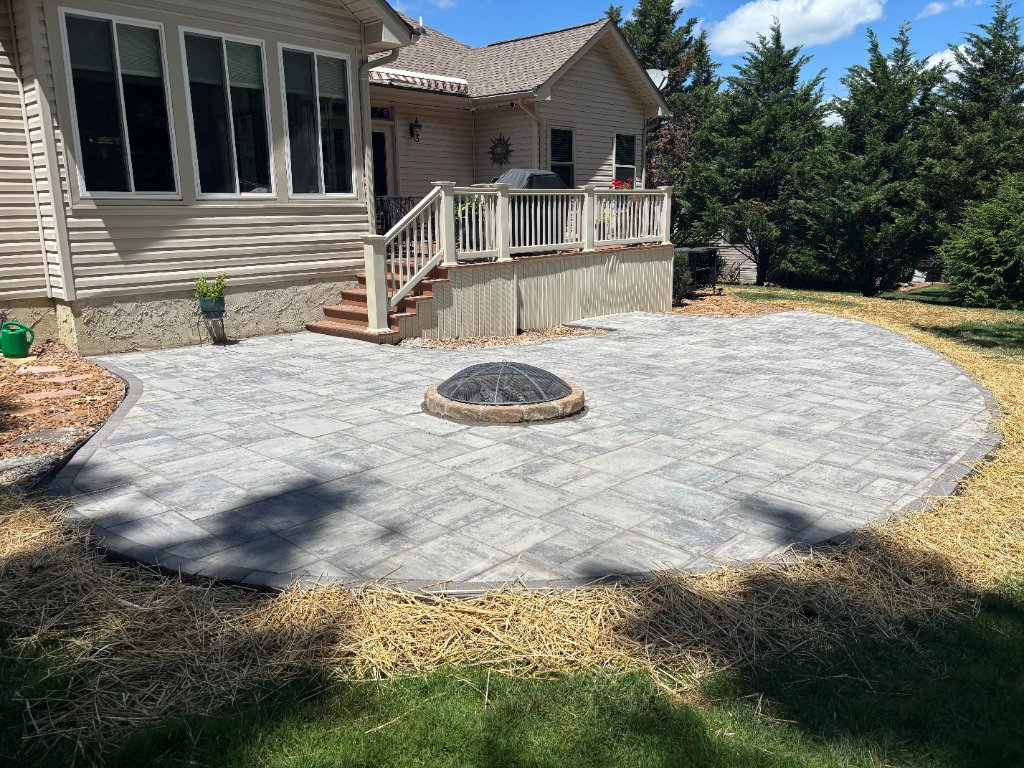
A paver patio installed correctly on a proper base can realistically last 30 to 50 years — longer than most homeowners will live in the same house. But there's a big caveat: the base has to be right, and a minimal amount of maintenance is required along the way. Here's what you need to know.
What Determines Paver Lifespan
Base Preparation (Most Critical)
The #1 cause of premature paver failure is poor base preparation. Pavers installed over uncompacted soil or insufficient base depth will settle, shift, and become uneven within a few years regardless of the quality of the pavers themselves. A proper base is 8–12 inches of mechanically compacted dense-grade aggregate — done in lifts, not all at once.
Paver Quality
Manufactured concrete pavers from reputable brands have a density and absorption rate specification. Thin or low-density pavers chip, crack, and fade faster. Premium pavers have a 50+ year lifespan in the right climate conditions.
Climate Conditions
The Cumberland Plateau's freeze-thaw cycles are where pavers shine compared to poured concrete. Flexible joints between individual pavers allow the system to move slightly as the ground freezes and thaws without cracking.
Paver Maintenance Schedule
- Year 1–2: Allow polymeric sand in joints to fully cure. Keep leaf blowers off direct jet setting.
- Every 3–5 years: Reseal the paver surface with a quality paver sealer to protect color and prevent weed germination in joints.
- As needed: Reset any individual pavers that have settled or shifted. This is the main advantage of pavers — it's a simple fix, not a full replacement.
- Every 5–10 years: Reapply polymeric joint sand if joints have eroded.
Signs Your Paver Patio Needs Attention
- Pavers rocking when walked on (base settling — resetting needed)
- Weeds growing in joints (polymeric sand has failed — resand and seal)
- Significant color fading (seal to restore and protect)
- Low spot accumulating water (grade adjustment — individual pavers reset to correct slope)
